
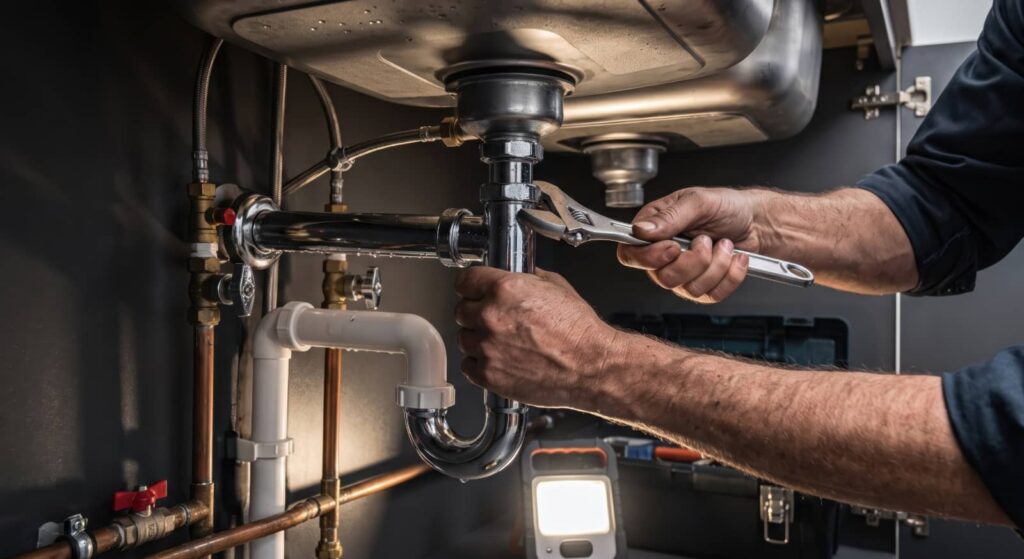
You can avoid costly winter pipe damage with Winter Burst Pipe Prevention Tips like checking vulnerable lines before temperatures drop, especially in basements, attics, and exterior walls. Look for corrosion, leaks, or worn insulation, then add foam sleeves or heat tape where pipes are exposed. Open cabinet doors under sinks to let warm air reach plumbing, and keep your thermostat steady. If a pipe starts to freeze, act quickly, because the next step can determine whether you face a minor repair or a burst.
Key Takeaways
- Inspect unheated areas for corrosion, loose fittings, drips, and cold spots before winter.
- Insulate exposed pipes with foam sleeves, fiberglass, or heat tape, especially at elbows and joints.
- Open cabinet doors under sinks to let warm air reach plumbing during hard freezes.
- Thaw frozen pipes gently with warm air or towels; never use open flames.
- Shut off the main water supply quickly if a pipe freezes to reduce burst damage.
Inspect Vulnerable Pipes Before Freeze
Before the first hard freeze, inspect the pipes most likely to fail: those in unheated basements, crawl spaces, attics, exterior walls, and garages. You’re looking for corrosion, loose fittings, slow drips, and any pipe that already feels coldest to the touch.
Check joints, valves, and elbows with a flashlight, and wipe each area dry so leaks show up fast. If you spot staining, rust, or mineral buildup, mark it and fix it now.
Open cabinet doors under sinks to confirm airflow, and make sure hose bibs and shutoff valves operate smoothly.
These winter burst pipe prevention tips help you catch weak points early, so you and your household stay protected, prepared, and confident when temperatures drop.
Insulate Exposed Pipes In Cold Areas
Once you’ve identified exposed pipes, wrap them with foam pipe sleeves, fiberglass insulation, or UL-listed heat tape rated for plumbing use. Seal every seam with tape to limit heat loss and stop drafts from reaching the pipe surface.
You should cover elbows, joints, and short runs first, since those spots freeze fastest. In unheated basements, crawl spaces, garages, and exterior walls, add insulation with a snug fit but don’t crush it. Keep the pipe fully covered from end to end.
Choose products sized for your pipe diameter and temperature rating, then follow the manufacturer’s instructions. When you insulate well, you help your home stay resilient, lower burst risk, and join other homeowners who protect plumbing before hard freezes arrive.
Open Cabinets To Warm Plumbing
After you insulate exposed pipes, help warm air reach the plumbing by opening cabinet doors under sinks, especially along exterior walls. This simple step lets conditioned air circulate around supply lines, traps, and shutoff valves that sit in cold cavities.
You should clear cleaners, bins, and other items that block airflow, then leave the doors open overnight or during hard freezes. If you live with family or roommates, let everyone know so they don’t close them by habit.
Check the space for leaks, damp insulation, or pests while you’re there. Keep pets and small children away from chemicals and sharp hardware.
Prevent Frozen Pipes With Thermostat Settings
Set your thermostat to a steady temperature day and night so indoor heat can protect vulnerable plumbing from freezing. Keep it at least 55°F, even when you’re away, because rapid drops increase pipe risk in exterior walls, attics, and crawlspaces.
If your system has programmable controls, set a consistent schedule and avoid large setbacks overnight. You’re not just heating rooms; you’re protecting the shared plumbing network that keeps your household running.
Close gaps around doors and windows to help the thermostat hold temperature with less strain. Check rooms near uninsulated pipes and confirm they stay warm enough.
If you use zoned heating, don’t shut off remote areas completely. A stable setting costs less than a burst-pipe repair and helps your home stay resilient all winter.
Act Fast When Pipes Start Freezing?
If you notice pipes starting to freeze, thaw them safely with gentle heat from a hair dryer or warm towels, and never use an open flame.
Shut off the main water supply right away if ice has blocked flow or a pipe looks stressed.
Once thawing starts, check for leaks at joints, fittings, and exposed runs so you can catch damage before it worsens.
Thaw Pipes Safely
When pipes start to freeze, act quickly but carefully to thaw them before pressure builds and they burst. You can restore flow with steady heat, but keep the process controlled so you don’t damage the pipe or nearby materials. Use these steps:
- Open the faucet tied to the frozen line so melted water can move.
- Apply warm air with a hair dryer, heating pad, or space heater kept at a safe distance.
- Move from the faucet back toward the cold spot until water runs normally.
Check exposed sections first, especially along exterior walls, crawl spaces, and unheated cabinets.
If you smell burning, hear cracking, or can’t reach the frozen area, stop and get help. Your home crew can handle this safely when you stay patient and methodical.
Shut Off Water
A frozen line can still burst even as you try to thaw it, so cut off the main water supply as soon as you suspect a serious freeze or hear signs of stress.
You protect your home faster when you know where the main shutoff valve sits and can reach it without searching. Turn it clockwise until it stops, then open a nearby faucet to relieve trapped pressure in the line.
If you live with others, tell everyone the water is off so no one runs fixtures by habit. Keep the shutoff area clear, labeled, and easy to access in winter.
This quick move limits damage, buys you time, and keeps you in control with the rest of your household.
Check For Leaks
Inspect exposed pipes, joints, and nearby ceilings or walls for damp spots, drips, frost, or bulging sections as soon as freezing weather hits. You’ll catch trouble early and keep your home’s plumbing team in the safe zone.
If you see moisture, act fast: a small leak can freeze, expand, and split a pipe.
- Check under sinks, behind appliances, and around hose bibs daily.
- Feel pipes for unusual cold spots, then watch for condensation or ice.
- Mark any leak, shut off the water, and call a plumber if pressure drops.
Keep a flashlight handy and listen for hissing or ticking.
When you and your neighbors stay alert together, you reduce repair costs and protect shared winter readiness.
Turn Off Water To Prevent Burst Damage
Shut off your main water supply as soon as you suspect a freeze, because moving water can keep building pressure in a weakened pipe.
Then drain the remaining water from the lines to reduce the chance of a split pipe causing more damage.
This step won’t fix the freeze, but it can limit flooding and protect your home.
Shut Off Main Supply
Turning off your main water supply is one of the fastest ways to limit burst-pipe damage during a winter freeze. You take control before pressure builds, and that keeps your home in the safe group of prepared homeowners.
Locate the shutoff valve now, not after a pipe fails. Make sure everyone in your household knows where it is.
- Find the main valve near the meter, basement, or entry point.
- Turn it clockwise until water stops.
- Test a faucet briefly to confirm flow has stopped.
Label the valve clearly and keep the area accessible. If you live in a shared property, coordinate with neighbors or building staff so you’re ready when temperatures drop.
Fast action protects your system and helps you stay ahead of winter risk.
Drain Remaining Water
After you close the main supply, drain the remaining water from your pipes to cut freeze risk and reduce burst damage.
Open every faucet, starting with the highest level and ending with the lowest, so gravity helps empty the lines.
Flush toilets once to clear tank and bowl supply, then stop.
If you have exterior hose bibs, disconnect hoses and open the spigots to release trapped water.
Use the boiler or water-heater drain only if your system manual allows it.
Leave faucets slightly open after draining to relieve pressure if ice forms.
Check basement, crawlspace, and garage lines, since cold air often hits those first.
This step helps protect your home and keeps your household ready for the next cold snap.
Frequently Asked Questions
How Do I Know if My Home Plumbing Has Already Frozen?
You’ll notice little or no water flow, frost on exposed pipes, odd gurgling, or cold cabinets under sinks. If you tap pipes and they sound solid, your plumbing’s likely frozen already.
What Pipe Materials Are Most Vulnerable to Winter Freezing?
You’ll find exposed copper and PVC most vulnerable; thin, uninsulated runs freeze first. If your attic line burst last January, you know why. Protect them with insulation, heat tape, and sealed drafts.
Can Draining Faucets Help Prevent Burst Pipes During Vacations?
Yes—draining faucets can help, but you should also shut off the main water, open taps, and insulate vulnerable lines. You’ll reduce trapped water, lower freeze risk, and leave your home better protected during vacation.
Should Outdoor Hose Bibs Be Shut off Before Winter?
Yes—you should shut them off. You’ll prevent freezing, reduce burst risk, and protect your plumbing. As the adage goes, an ounce of prevention’s worth a pound of cure; drain, disconnect, and insulate.
When Should I Call a Plumber for Frozen Pipe Concerns?
Call a plumber right away if you can’t thaw the pipe safely, you lose water, see bulging, leaks, or frost, or the pipe sits in a wall, ceiling, or crawlspace you can’t reach.
Review
You can cut your risk of a winter burst pipe by acting before temperatures drop. Inspect basements, attics, and other cold spots, then insulate exposed lines and open sink cabinets to let warm air move around plumbing. Keep your thermostat steady, and thaw any frozen pipe gently. Remember that water expands when it freezes, which can split a pipe fast. If trouble starts, shut off the main valve immediately.