
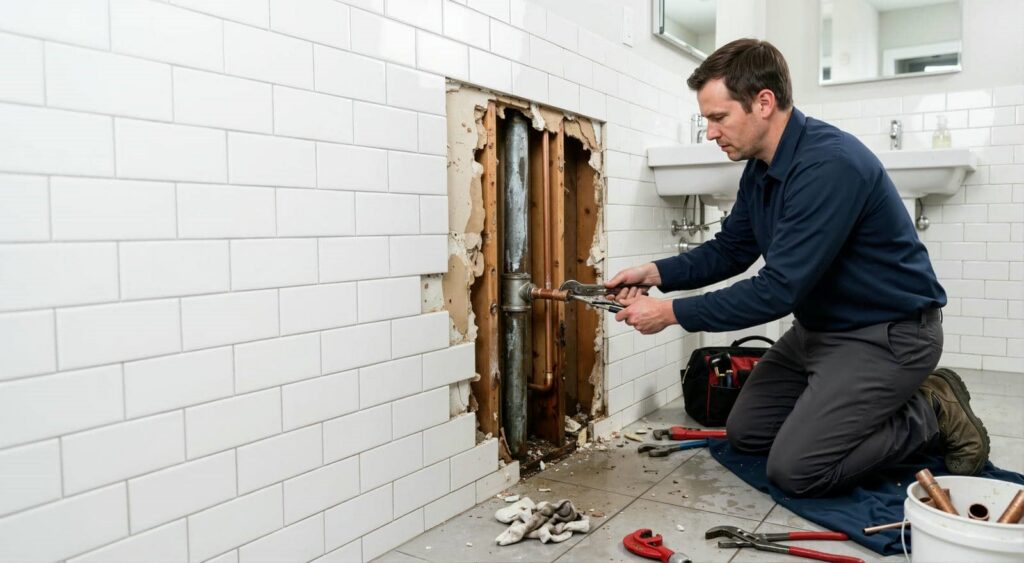
It’s funny how a sudden burst pipe can turn your home into a mini swimming pool. When this happens, knowing the right steps can make all the difference. You’ll need to act quickly to prevent further damage and mold growth. From turning off your water supply to evaluating structural damage, each action is essential. Understanding these techniques will help you tackle the aftermath effectively and restore your space. So, what should you do first?
Key Takeaways
- Immediately turn off the main water supply to prevent further flooding and damage.
- Remove standing water using a wet/dry vacuum and thoroughly dry affected areas.
- Inspect and replace damaged drywall and insulation, cutting above the water line.
- Treat surfaces with a mold-killing solution to prevent future mold growth.
- Contact professionals for extensive damage, hidden moisture detection, or if overwhelmed.
What to Do Immediately When Pipes Burst
When a pipe bursts, act quickly to minimize damage. First, turn off the main water supply to prevent further flooding.
Next, unplug electrical devices in the affected area to ensure safety. If possible, move furniture and belongings away from the water to limit damage.
Use towels or a wet vacuum to absorb standing water, but avoid using a regular vacuum. Document the damage with photos for insurance claims, as this will aid in your water damage repair after a burst pipe.
Once you’ve addressed immediate concerns, contact a professional for assessment and restoration. They’ll help you navigate the repairs and ensure your home returns to its original state, fostering a sense of security and belonging in your space.
Causes and Effects of Burst Pipes
Burst pipes can occur due to various factors, including freezing temperatures, corrosion, and excessive water pressure. When temperatures drop, water inside pipes can freeze, expanding and causing the pipe to crack.
Corrosion, often from age or chemical reactions, weakens pipes, leading to leaks or bursts. Excessive water pressure can stress your plumbing system, especially if it exceeds 80 psi, resulting in ruptures.
The effects of a burst pipe can be devastating. You may face significant water damage, mold growth, and structural issues in your home. Prompt action is vital to mitigate these consequences.
Regular maintenance and monitoring can help you prevent these situations, ensuring your plumbing remains reliable and your home stays safe. Taking these steps fosters a sense of community and security within your space.
Effective Techniques for Repairing Water Damage
Addressing water damage swiftly is essential to prevent further deterioration and costly repairs. Start by turning off the water supply to halt additional leaks.
Next, remove standing water using a wet/dry vacuum or pump. Thoroughly dry affected areas with fans and dehumidifiers to inhibit mold growth.
Inspect and remove damaged drywall and insulation, confirming you cut at least 12 inches above the water line. Treat remaining surfaces with a mold-killing solution to prevent future issues.
If flooring is damaged, consider replacing it, especially if it’s carpet.
Finally, check your plumbing system for leaks or weaknesses to ensure your repairs hold.
These systematic steps can restore your space, creating a safer and more welcoming environment for everyone.
How to Prevent Future Pipe Bursts
To effectively prevent future pipe bursts, it’s crucial to understand the conditions that lead to such failures. Start by insulating exposed pipes, especially in unheated areas like basements and attics. This helps maintain a consistent temperature and prevents freezing.
Regularly inspect your plumbing for leaks or corrosion; even minor issues can escalate. Consider installing a smart thermostat to monitor temperature fluctuations, particularly during cold snaps. Keep your home’s heating system well-maintained to ensure even warmth throughout.
Additionally, if you’re going away during winter, let faucets drip slightly to relieve pressure. Finally, be mindful of your water pressure; high pressure can strain pipes, so install a pressure regulator if needed.
Taking these proactive steps can greatly reduce your risk of future bursts.
When to Call Professionals for Water Damage Restoration?
When should you consider calling professionals for water damage restoration? If the water damage covers a large area, or if it’s been sitting for more than 24 hours, it’s time to reach out to experts.
They’ve specialized equipment, like industrial dehumidifiers and moisture meters, that can effectively detect hidden moisture and prevent mold growth.
If you notice any structural damage, such as buckling floors or peeling paint, don’t hesitate to call.
Additionally, if you feel overwhelmed or unsure about the cleanup process, professionals can provide peace of mind.
Frequently Asked Questions
How Can I Identify Hidden Water Damage in My Home?
To identify hidden water damage in your home, start by checking for musty odors, as they often indicate moisture.
Inspect walls for discoloration or peeling paint, and look for warping in floors.
Use a moisture meter to measure dampness in suspicious areas.
Don’t forget to check behind appliances and under sinks.
If you spot any signs, it’s essential to address them quickly to prevent further damage and maintain your home’s integrity.
Will My Insurance Cover Water Damage From a Burst Pipe?
Yes, your insurance might cover water damage from a burst pipe, but it depends on your policy.
Most homeowners’ insurance includes coverage for sudden and accidental water damage.
To confirm you’re protected, review your policy details and check for any exclusions or limits.
Document the damage thoroughly and notify your insurer promptly.
They’ll guide you through the claims process, helping you get the support you need to recover.
Can I DIY Water Damage Repair, or Should I Hire a Pro?
You can tackle minor water damage repairs yourself if you’re handy and have the right tools, but hiring a pro is often wiser for significant issues.
A professional ensures proper drying, mold prevention, and structural integrity, which are essential for your home’s safety.
If you’re unsure or the damage is extensive, don’t hesitate to call in an expert.
It’ll save you time, stress, and potentially more costly repairs down the line.
What Are the Long-Term Effects of Water Damage on My Property?
Water damage can lead to serious long-term effects on your property, including structural weakening, mold growth, and compromised air quality.
You’ll notice peeling paint, warped floors, and musty odors if the issue isn’t addressed promptly. Ignoring these problems can escalate repair costs and affect your health.
To protect your home and well-being, consider regular inspections and timely repairs, ensuring your living space remains safe and comfortable for you and your loved ones.
How Do I Safely Dispose of Damaged Materials After a Pipe Burst?
To safely dispose of damaged materials after a pipe burst, start by wearing protective gear like gloves and masks.
Remove soaked items, such as drywall and insulation, and place them in sturdy trash bags.
Check local regulations for hazardous waste disposal, as some materials may require special handling.
If possible, photograph the damage for insurance claims.
Once everything’s removed, clean the area thoroughly to prevent mold growth and ensure a safe environment.
Conclusion
Addressing water damage from a burst pipe promptly is essential to prevent further issues. By following the outlined steps—shutting off the water, removing standing water, and drying the area—you can minimize damage and reduce mold risk. If the situation’s extensive, don’t hesitate to call in professionals who can ensure thorough restoration and peace of mind.