
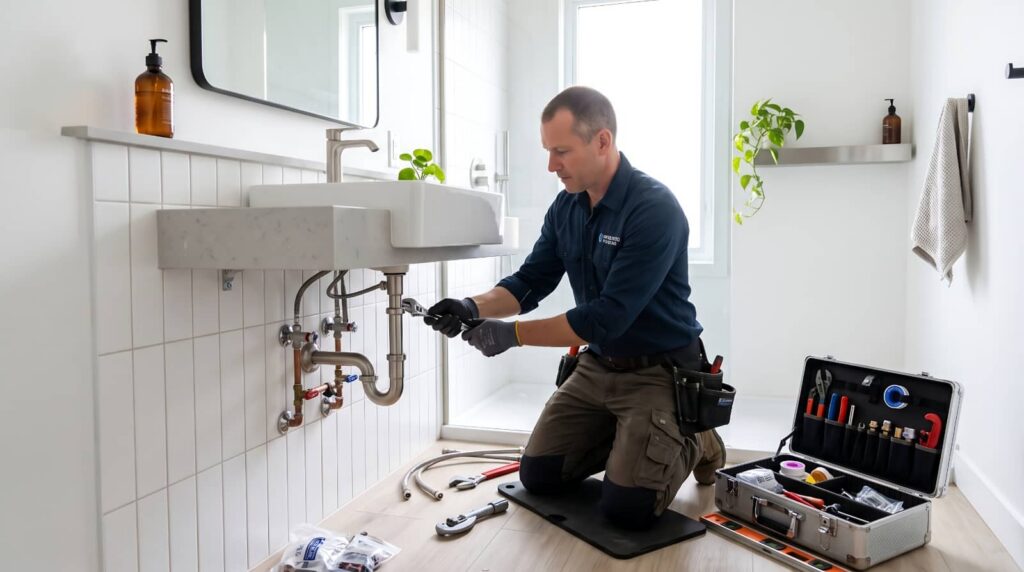
When a burst pipe lets out 30 gallons an hour, it’s like a small flood starting inside your walls. You first shut off the main water supply to stop the damage, then you assess the break. Depending on the pipe type and failure size, you might clamp a leak, cut out the damaged section, solder a crack, or replace the line entirely. The real decision comes next.
Key Takeaways
- Plumbers first shut off the main water valve to stop flooding and confirm all flow is fully isolated.
- They inspect the burst pipe and choose a repair method such as cut-out-and-coupling, soldering, press fittings, or epoxy wraps.
- Damaged sections are removed and replaced with new pipe or fittings to restore a secure, leak-free line.
- If corrosion, multiple splits, or extensive damage are found, the plumber recommends full pipe replacement instead of patching.
- Repairs are pressure-tested after completion, and plumbers advise insulation, drip protection, and maintenance to prevent future bursts.
How Plumbers Shut Off Water Fast?
When a pipe bursts, plumbers act fast to shut off the water at the main valve and stop further flooding. You’ll usually see them move straight to the home’s main shutoff, then confirm the valve closes fully.
If the meter keeps spinning or pressure stays in the line, they’ll check secondary isolation valves so the system goes quiet. This quick control protects walls, flooring, and fixtures while you wait for repairs.
You can expect clear communication, because a good plumber tells you what’s isolated, what’s still live, and what comes next. That’s a key step in how plumbers fix burst pipes: they stop the source first, stabilize the area, and make sure your plumbing team can work safely with confidence.
Common Ways Plumbers Repair Burst Pipes?
Plumbers usually choose one of a few proven repair methods, depending on the pipe material, the size of the split, and how much of the line is damaged.
You’ll often see a cut-out-and-coupling repair, where the damaged section gets removed and replaced with new pipe and fittings. For small cracks on copper, they may sweat in a new section with solder or use press fittings for a fast, clean seal.
On PVC or CPVC, solvent cement bonds the replacement pieces tightly. For temporary control, a plumber can apply a pipe clamp or epoxy wrap to stop active leaking while they stabilize the line.
They test each repair under pressure, check every joint, and make sure your system’s flowing safely again, so you can get back to normal with confidence.
When Pipe Replacement Is the Better Fix?
If the pipe has widespread corrosion, multiple splits, or brittle material that’s failed in more than one spot, replacement is usually the smarter fix. You avoid repeating emergency repairs on a line that can’t reliably hold pressure.
Plumbers choose replacement when the damaged section is long, the wall thickness is compromised, or patched areas would leave weak joints behind. You also benefit when access is already open, because the extra labor can be minimal compared with another call later.
A full replacement gives you cleaner flow, fewer leak points, and a system you can trust again. If you’re part of a home crew that values long-term reliability, this option keeps everyone from chasing the same problem twice.
What Causes Burst Pipes?
Burst pipes usually start with a pressure problem, a material failure, or both. When water can’t expand normally, pressure builds inside the line and stresses weak sections until they split.
You’ll also see failures where corrosion thins metal, joints loosen, or plastic becomes brittle with age. Physical damage matters too: a nail through a pipe, freezing in an exposed wall, or ground movement can crack a line fast.
Poor installation can leave supports, fittings, or seal points undersized, so the system works harder than it should. If you live in an older home, you’re part of a group that often faces worn piping and hidden defects.
Knowing these causes helps you understand why plumbers inspect the full run, not just the visible leak.
How to Prevent Future Burst Pipes?
A few targeted upgrades can go a long way toward preventing another burst pipe. You can protect your home by insulating exposed lines, sealing air leaks, and keeping indoor temperatures steady.
During cold snaps, let faucets drip slightly so pressure doesn’t build in vulnerable pipes. Schedule annual inspections so you can catch corrosion, loose joints, and weak valves before they fail.
If your water pressure runs high, install a pressure-reducing valve to protect the whole system and reduce stress on fittings.
- Insulate and seal to keep fear out of your walls.
- Monitor pressure and temperature to avoid sudden failures.
- Replace aging pipe sections so your household stays secure together.
With consistent care, you’ll join other prepared homeowners who avoid costly water damage.
Frequently Asked Questions
How Quickly Can a Plumber Arrive After a Pipe Bursts?
You can often get a plumber within 30 minutes to a few hours, depending on urgency, location, and availability. Call a 24/7 service, shut off water, and you’ll speed up response time.
Will My Homeowner’s Insurance Cover Burst Pipe Repairs?
Usually, yes—if you acted promptly and the burst came from sudden, accidental damage. You’ll need to review your policy, document the leak, and file fast. Coverage may exclude neglected, frozen, or gradual pipe failure.
Can Plumbers Repair Pipes Without Cutting Through Walls?
Yes, you can often avoid wall cuts with access panels, rerouting, pipe relining, or spot repairs. You’ll get faster fixes, less mess, and a safer home when you work with a skilled plumber.
How Do Plumbers Detect Hidden Water Damage After Leaks?
Like a detective, you inspect moisture meters, thermal cameras, and meter readings to spot hidden damage. You’ll test walls, floors, and insulation, trace stains, and verify repairs so your home feels safe again.
What Should I Do While Waiting for Emergency Plumbing Help?
You should shut off the main water valve, turn off electricity near wet areas, and move valuables away from leaks. Catch drips with buckets, dry surfaces, and wait safely for your plumber’s arrival.
Conclusion
When you deal with a burst pipe, the first step is to shut off the main water supply fast, then assess the damage. A plumber may use a clamp, solder a small crack, or cut out and couple a larger break. If corrosion or repeated failures show bigger trouble, you should replace the pipe. In plumbing, haste really is of the essence. Prevent future bursts with insulation, pressure control, and regular inspections.