
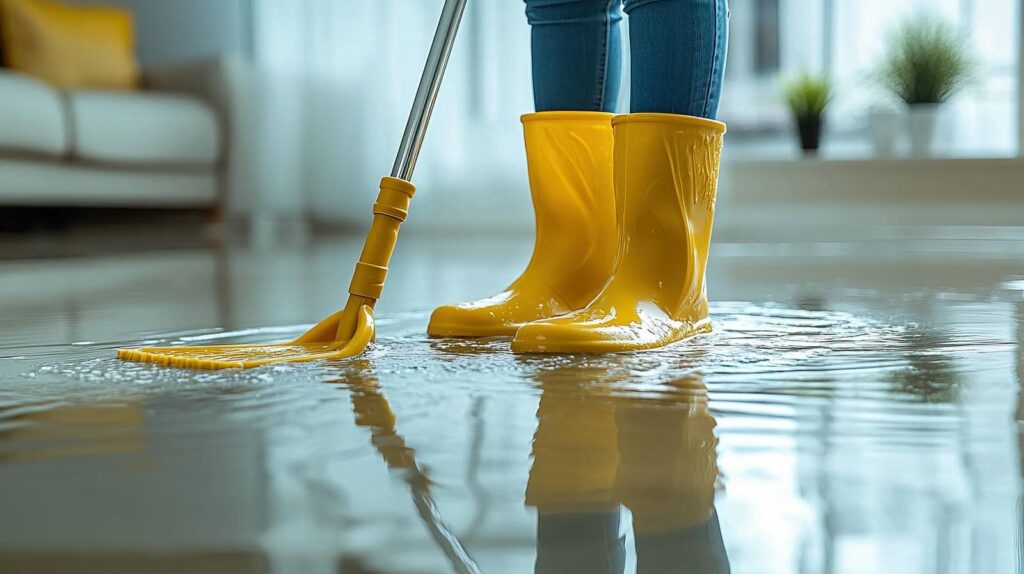
After a storm flood, your home faces serious challenges, and addressing them quickly is vital. You’ll need to prioritize safety as you assess the damage and begin cleanup. Knowing what steps to take can save your home from further issues, like mold growth. Let’s explore essential actions and supplies that can make this overwhelming process more manageable, ensuring you’re on the right path to recovery and restoration.
Key Takeaways
- Prioritize safety by wearing protective gear and avoiding flood-damaged areas to prevent health risks.
- Document all damage with photographs for insurance claims and assess structural integrity before cleanup.
- Remove standing water quickly using pumps or wet vacuums, and increase airflow by opening windows and using fans.
- Control indoor humidity levels with dehumidifiers to prevent mold growth and promote effective drying.
- Seek professional help if damage is overwhelming or if mold signs appear, ensuring thorough restoration.
Immediate Safety Actions After a Flood
When the floodwaters recede, your first priority should be safety. Before you even think about storm flood cleanup for homes, check your surroundings.
Avoid flood-damaged areas, as they might hide hazards like sharp debris or unstable structures. If you’ve lost power, steer clear of downed power lines and report them immediately.
Wear protective gear, like boots and gloves, to shield yourself from potential contaminants. Make sure to have a flashlight handy, as darkness can make traversing tricky.
If you smell gas or suspect a leak, evacuate and call for help. Remember, your well-being matters most; take the time to assess your situation before diving into cleanup efforts.
You’re not alone in this—community support is invaluable during recovery.
Assessing the Damage After a Storm Flood
As you begin evaluating the damage after a storm flood, it’s essential to stay focused and systematic. Start by examining the exterior of your home. Look for signs of structural damage, such as cracks in the foundation or compromised walls.
Next, move indoors, checking for water levels and moisture. Inspect your appliances, electrical systems, and plumbing; they might’ve been affected. Document everything with photographs for insurance purposes. Don’t forget to note any personal belongings that may need replacing.
Must-Have Supplies for Effective Flood Cleanup
When tackling flood cleanup, having the right supplies on hand is vital.
You’ll need essential cleaning tools to remove debris and water, along with safety gear to protect yourself from hazards.
Let’s go over what you should gather to make the process smoother and safer.
Essential Cleaning Tools
Flood cleanup can feel overwhelming, but having the right tools makes all the difference.
Start with a sturdy push broom to sweep away debris and excess water. A wet/dry vacuum is essential for sucking up standing water and cleaning up mud.
Don’t forget heavy-duty trash bags to dispose of ruined items quickly. For scrubbing surfaces, a stiff-bristled brush and a mop will help remove dirt and contaminants.
Microfiber cloths are great for detailing and drying, while a bucket can hold cleaning solutions.
Finally, a pair of rubber gloves will protect your hands as you work.
These essential tools will make the cleanup process smoother, allowing you to reclaim your home and find comfort again.
Safety Gear Necessities
Cleaning up after a storm is challenging, so prioritizing your safety is vital. Start with sturdy gloves to protect your hands from sharp objects and debris.
A pair of waterproof boots will keep your feet dry and shielded from hazardous materials. Don’t forget a mask; it helps filter out mold spores and dust that can worsen respiratory issues.
Safety goggles are important, too, as they’ll protect your eyes from flying debris. A hard hat can safeguard your head from falling objects, especially if your home sustained structural damage.
Finally, keep a first aid kit handy for any minor injuries. By equipping yourself with the right gear, you’ll not only guarantee your safety but also make the cleanup process more manageable.
Step-by-Step Guide to Drying Out Your Home
As you begin the process of drying out your home, it’s essential to act quickly to minimize damage and prevent mold growth.
Start by removing standing water with a pump or wet vacuum. Next, open windows and doors to increase airflow. If it’s safe, turn on fans and dehumidifiers to expedite drying.
Remove soaked carpets, rugs, and furniture, as these can trap moisture. Use towels to soak up excess water from surfaces.
Inspect your walls and baseboards for dampness; you might need to cut away waterlogged materials.
Finally, monitor humidity levels regularly.
How to Prevent Mold During Drying?
To prevent mold during the drying process, you need to control indoor humidity levels and guarantee proper ventilation.
Using mold-resistant products can also make a significant difference in keeping your home safe.
Let’s explore these strategies to help you protect your space effectively.
Control Indoor Humidity Levels
Controlling indoor humidity levels is essential during the drying process to prevent mold growth. High humidity can create the perfect environment for mold to thrive, so it’s vital to take action.
Here are three effective strategies to manage humidity:
Use Dehumidifiers: Set up dehumidifiers in affected areas to lower moisture levels quickly.
Monitor Humidity: Keep an eye on humidity levels with a hygrometer, aiming for 30-50% relative humidity.
Air Conditioning: Run your air conditioning system, which helps to reduce humidity while cooling your home.
Ensure Proper Ventilation
Maintaining proper ventilation is essential during the drying process to keep mold at bay. Open windows and doors when it’s safe outside, allowing fresh air to circulate through your home.
If you can, use fans to boost airflow, directing them toward damp areas. Exhaust fans in bathrooms and kitchens can also help reduce humidity.
If conditions permit, consider using dehumidifiers to keep moisture levels in check. Regularly check for any signs of mold growth, especially in hidden corners.
Remember, staying proactive in ventilation not only protects your space but also helps you feel more at ease during this challenging time.
You’re not alone in this; many are managing similar struggles, and together, we can overcome them.
Use Mold-Resistant Products
While you tackle the aftermath of flooding, using mold-resistant products can make a significant difference in preventing mold growth.
It’s essential to protect your home and your loved ones during this stressful time. Here are three key items to evaluate:
Mold-Resistant Drywall: This type of drywall contains additives that resist moisture, making it less likely for mold to thrive.
Mold-Resistant Paint: Applying this paint on walls creates a barrier against mold, especially in high-humidity areas.
Mold-Resistant Insulation: Using this insulation helps keep moisture levels low and reduces the risk of mold in hidden spaces.
Should You Repair or Replace Damaged Items?
Deciding whether to repair or replace damaged items after a storm can feel overwhelming. Start by evaluating the extent of the damage. If an item’s structure is compromised or it’s heavily contaminated, replacement might be the safer choice.
For minor damages, repairs can be a practical option, saving you money and preserving sentimental value.
Consider the cost-effectiveness of each choice. Sometimes, spending a little more on repairs can extend the life of an item, while other times, replacing it can offer greater peace of mind.
Think about your emotional connection to the damaged items too. Ultimately, trust your instincts and don’t hesitate to seek advice from professionals or friends.
You’re not alone in this; many are facing similar challenges.
Navigating Flood Damage Insurance Claims
After evaluating the damage to your belongings, the next step is often managing the complexities of flood damage insurance claims. This process can feel overwhelming, but understanding a few key points can help you navigate it more smoothly:
Document Everything: Take photos and make a list of damaged items. This evidence is vital for your claim.
Review Your Policy: Familiarize yourself with your coverage. Know what’s included and any limits you may face.
File Promptly: Submit your claim as soon as possible. Delays can hinder your compensation process.
Stay organized and proactive. Engaging with your insurance provider regularly can also help clarify any questions you have.
You deserve to recover and restore your home.
When to Hire Professional Help for Flood Recovery?
How can you tell when it’s time to call in the pros for flood recovery? If the damage seems overwhelming, don’t hesitate to seek help.
When water has soaked into walls, flooring, or insulation, it’s vital to have experts assess the situation. Mold can develop quickly, posing health risks, so if you notice any signs, act fast.
Additionally, if your home’s structural integrity is in question—like sagging ceilings or warped beams—professional intervention is essential.
You shouldn’t have to navigate this alone; skilled teams can’t only restore your home but also provide peace of mind.
Trust your instincts; if you feel unsure, calling in the pros can save you time, stress, and money in the long run.
Preventative Measures to Avoid Future Flood Damage
Flood recovery can be overwhelming, but taking steps to prevent future damage can give you peace of mind.
By implementing a few key strategies, you can protect your home and loved ones from future storms. Here are three effective measures:
Elevate Electrical Systems: Raise electrical outlets, appliances, and HVAC systems above potential flood levels to minimize damage.
Install Sump Pumps: A sump pump can help remove water quickly, reducing the risk of flooding in your basement or crawlspace.
Create Barriers: Use sandbags or flood barriers around your home to divert water away during heavy rainfall.
Frequently Asked Questions
How Long Does Flood Cleanup Typically Take?
Flood cleanup typically takes anywhere from a few days to several weeks, depending on the severity and extent of the damage.
You’ll want to assess the situation quickly and prioritize tasks like removing water and debris.
It’s important to act fast to prevent mold and further damage.
Remember, reaching out for help can make this overwhelming process easier.
You’re not alone in this, and there are resources available to support you.
What Types of Insurance Cover Flood Damage?
Most standard homeowners’ insurance policies don’t cover flood damage, but you can get separate flood insurance through the National Flood Insurance Program (NFIP).
If you’re in a flood-prone area, consider this option. Some policies might include water damage from plumbing issues, but it’s crucial to read the fine print.
Check with your agent to understand your coverage and guarantee you’re protected. You deserve peace of mind when it comes to your home.
Can I Live in My Home During Cleanup?
You probably can’t live in your home during cleanup, especially if there’s significant damage or safety hazards.
The cleanup process often involves removing water, mold, or damaged materials, which can create unhealthy conditions.
It’s best to stay elsewhere until professionals assess the situation and guarantee it’s safe.
Your comfort and safety matter, so consider staying with family or friends until your home is fully restored and ready for you to return.
Are There Specific Cleaning Products for Flood-Damaged Items?
Yes, there are specific cleaning products designed for flood-damaged items.
In fact, about 80% of homeowners face mold issues after floods if they don’t act quickly. You’ll want to use a mix of water and detergent for surfaces, and consider specialized mold removers for affected areas.
Don’t forget to check labels for safety and effectiveness. It’s important to protect your belongings and guarantee a safe environment for you and your loved ones.
How Do I Find Reputable Flood Restoration Services?
To find reputable flood restoration services, start by asking friends or family for recommendations.
You can also check online reviews and ratings on platforms like Yelp or Google.
Look for companies with certifications from organizations like the Institute of Inspection, Cleaning, and Restoration Certification (IICRC).
Reach out to a few services, ask about their experience, insurance, and the methods they use.
Trust your instincts choose a team that makes you feel comfortable and supported.
Final Thoughts
In the aftermath of a storm flood, your safety comes first, your home deserves attention, and your peace of mind is essential. By evaluating damage promptly, drying out affected areas, and seeking help when needed, you can reclaim your space and restore normalcy. Remember, prevention is key; taking proactive steps now can shield your home from future floods. Stay vigilant, stay prepared, and guarantee your home remains a safe haven for you and your loved ones.