
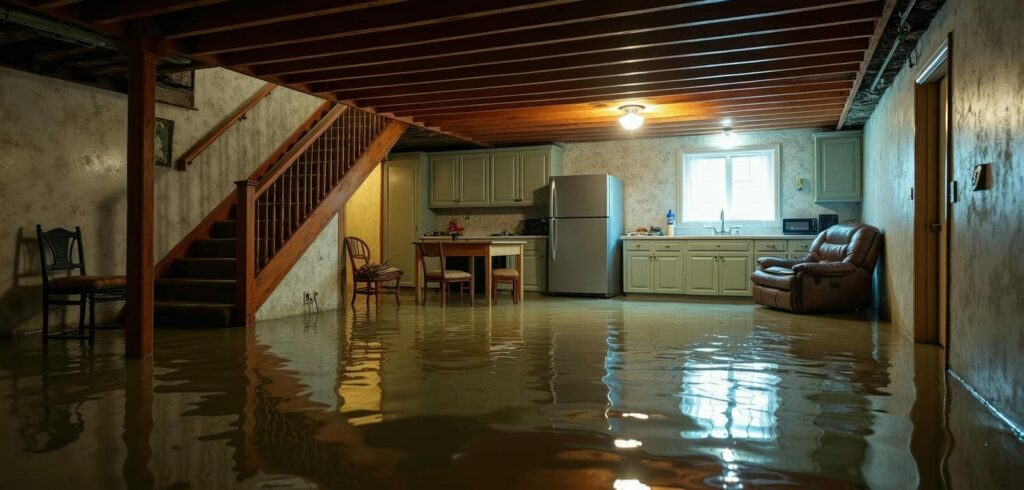
When your basement floods, quick action is vital to minimize damage and prevent mold growth. You need to prioritize safety by turning off the power in the affected area. Next, efficient water removal methods, like sump pumps and wet/dry vacuums, are essential. But what if the situation is worse than you thought? Understanding the underlying causes and knowing the key steps to take can make all the difference in recovery.
Key Takeaways
- Turn off electricity to ensure safety before starting any water removal efforts in the flooded basement.
- Use a sump pump for efficient drainage of large water volumes from the basement.
- For smaller amounts of water, utilize a wet/dry vacuum to remove excess quickly.
- Deploy fans and dehumidifiers to enhance air circulation and reduce humidity after water removal.
- Contact a water damage restoration expert if structural damage or mold growth is suspected.
Why Is My Basement Flooding? Common Causes Explained
When you notice water pooling in your basement, it’s essential to identify the underlying causes quickly. Common culprits include heavy rainfall, malfunctioning sump pumps, or improper drainage systems.
If your gutters are clogged or your downspouts direct water toward your foundation, you’re likely facing a serious issue. Cracks in your foundation or basement walls can also allow water to seep in, leading to flooding.
Additionally, groundwater can rise during storms, overwhelming your basement’s defenses. Understanding these factors is vital for effective emergency water removal for a flooded basement.
What to Do First After a Flood? Immediate Steps to Take
As soon as you discover flooding in your basement, it’s crucial to act swiftly to minimize damage and assure safety.
First, confirm your safety by turning off the electricity to avoid electric shocks. If water levels are high, don’t enter the space until a professional assesses the situation.
Next, document the damage for insurance claims—take photos and note affected areas.
Once it’s safe, remove any valuable items and furniture to prevent further damage. If possible, ventilate the area by opening windows and doors to reduce humidity.
Finally, contact a water damage restoration expert to address the flooding properly.
Taking these immediate steps can greatly impact the recovery process and help you reclaim your space.
Quick Water Removal Methods for Your Basement
Act quickly to remove water from your flooded basement to prevent extensive damage and mold growth. Here are some effective methods you can employ:
Use a sump pump: If you have one, it’s your best tool for quick drainage.
Wet/dry vacuum: Ideal for smaller amounts of water, it’s portable and efficient.
Mop and bucket: For minor flooding, this old-school method can be effective.
Fans and dehumidifiers: Increase air circulation to dry out the space faster.
Check for drainage: Verify your gutters and downspouts are clear to prevent future issues.
Essential Safety Tips for Water Removal
Before you start removing water, assess the electrical safety in your basement to avoid shocks or electrocution.
Always wear protective gear, including gloves and boots, to shield yourself from contaminants.
Prioritizing safety will ensure a more effective and secure water removal process.
Assess Electrical Safety First
When dealing with a flooded basement, it’s crucial to assess electrical safety first to prevent potentially life-threatening hazards.
You must act quickly and carefully to ensure your safety before removing any water. Here’s what to check:
Turn Off Power: Disconnect the electricity at the main breaker to eliminate shock risks.
Inspect Wiring: Look for damaged or exposed wires; don’t touch anything that looks compromised.
Use a Voltage Tester: Confirm that no power is flowing in the area.
Avoid Wet Areas: Stay clear of standing water where electrical appliances may be submerged.
Call a Professional: If unsure, consult an electrician to assess the situation.
Taking these precautions protects you and helps ensure a safer water removal process.
Wear Protective Gear Always
After ensuring electrical safety, the next step in water removal is to wear protective gear. This isn’t just a suggestion; it’s essential for your safety.
Start with waterproof boots to keep your feet dry and protected from hazardous debris. Wear gloves to shield your hands from contaminants and sharp objects lurking in the water. A mask is vital to prevent inhaling mold spores or other harmful particles. Safety goggles will protect your eyes from splashes and irritants.
When to Hire Professionals for Flood Recovery?
If you notice signs of severe damage, like structural instability or extensive water saturation, it’s essential to call in professionals immediately.
Health hazards, including mold and contaminated water, can pose serious risks to you and your family.
Without the right equipment and expertise, you may struggle to address these issues effectively, increasing the potential for long-term damage.
Signs of Severe Damage
While you may think you can handle minor water damage on your own, certain signs indicate severe damage that requires professional intervention. Ignoring these signs can lead to more extensive issues down the line.
Look out for the following:
Warped walls or floors: Indicates structural compromise.
Mold growth: A clear sign of prolonged moisture.
Unpleasant odors: Often linked to hidden water damage.
Peeling paint or wallpaper: Signifies underlying moisture problems.
Visible water stains: Reflects potential leaks or pooling.
If you notice any of these indicators, it’s essential to act quickly.
Hiring professionals ensures proper assessment and remediation, ultimately protecting your home and peace of mind.
Don’t wait until it’s too late; your home deserves the best care.
Health Hazards Involved
Ignoring signs of severe damage can expose you to significant health hazards. Mold growth, a common consequence of flooding, can develop within 24 to 48 hours, leading to respiratory issues and allergic reactions.
Additionally, floodwater often contains contaminants like bacteria and chemicals, which can pose serious health risks if not handled properly. If you notice persistent moisture, foul odors, or visible mold, it’s vital to act quickly.
DIY solutions mightn’t suffice; hiring professionals ensures thorough water removal and mold remediation. They’ve specialized knowledge and equipment to mitigate these dangers effectively.
Don’t underestimate the potential health effects—protect yourself and your loved ones by seeking expert help when faced with severe flooding. Your health is worth it.
Equipment and Expertise Needed
When faced with a flooded basement, having the right equipment and expertise is essential for effective recovery.
If you’re unsure about tackling this challenging task alone, it’s wise to hire professionals. They bring specialized tools and knowledge to ensure safety and efficiency.
Consider these key items professionals typically use:
- Submersible Pumps: Quickly remove standing water.
- Dehumidifiers: Help reduce moisture to prevent mold growth.
- Wet/Dry Vacuums: Clean up residual water and debris.
- Infrared Cameras: Detect hidden moisture in walls and floors.
- Protective Gear: Ensure safety from contaminants and hazards.
Involving experts can save you time, reduce health risks, and provide peace of mind during a stressful recovery process.
Preventing Future Basement Flooding: Best Practices
To effectively prevent future basement flooding, it’s crucial to understand the underlying causes and implement proactive measures.
First, verify your gutters and downspouts are clean and direct water at least six feet away from your foundation.
Next, inspect your basement for cracks or gaps; seal them with high-quality waterproofing products.
Consider installing a sump pump if you live in a flood-prone area, as it can efficiently remove excess water.
Additionally, maintain proper grading around your home to divert rainwater.
Finally, regularly check your home’s drainage system and make necessary adjustments.
Frequently Asked Questions
Can I Use a Regular Vacuum for Water Removal?
No, you can’t use a regular vacuum for water removal. It’s designed for dry materials and can damage the motor or create a safety hazard.
Instead, you should invest in a wet/dry vacuum specifically made for water extraction. These tools effectively handle liquids and help prevent mold growth.
Acting quickly is essential, so don’t delay—get the right equipment to protect your space and ensure your safety.
How Long Does It Take to Dry a Flooded Basement?
It typically takes 24 to 48 hours to dry a flooded basement, but several factors affect this timeline.
The extent of the water, humidity levels, and ventilation all play critical roles. You’ll want to use dehumidifiers and fans to speed up the process.
Don’t wait too long; mold can develop quickly. For the best results, act fast and ensure everything’s properly dried to protect your home and health.
Will My Homeowners Insurance Cover Flood Damage?
Your homeowners insurance typically doesn’t cover flood damage unless you’ve specifically added flood insurance to your policy.
Most standard policies protect against water damage from plumbing issues, not natural flooding.
It’s essential to check your policy details and discuss your coverage with your insurance agent.
If you’re in a flood-prone area, consider getting flood insurance to safeguard your home and belongings.
Don’t wait until it’s too late—protect yourself now.
What Items Should I Discard After Flooding?
After flooding, you should discard items that can’t be cleaned or dried properly. This includes soaked carpets, mattresses, upholstered furniture, and electrical appliances.
If items are contaminated with sewage or floodwater, they’re unsafe. Keep personal documents that can be salvaged, but be cautious.
Act quickly; mold can develop within 24-48 hours. Prioritizing safety and health is essential, so don’t hesitate to get rid of anything questionable.
Your well-being matters most.
How Can I Tell if Mold Is Growing?
To tell if mold’s growing, look for dark spots or patches on walls, ceilings, and floors. You might notice a musty smell or see water stains.
Check for dampness in hidden areas like behind furniture or under carpets. If you find any of these signs, act quickly—mold spreads fast.
Don’t forget to monitor humidity levels; they should stay below 60% to prevent mold growth. Your home deserves a safe, clean environment.
Conclusion
In the aftermath of a flood, acting quickly can save your basement from extensive damage and mold growth. Have you ever imagined waking up to a submerged sanctuary, filled with stagnant water? By following the steps outlined, you can efficiently remove water and safeguard your home. Remember, if the situation overwhelms you, don’t hesitate to call in professionals. Taking swift action now can protect your investment and ensure your peace of mind.