
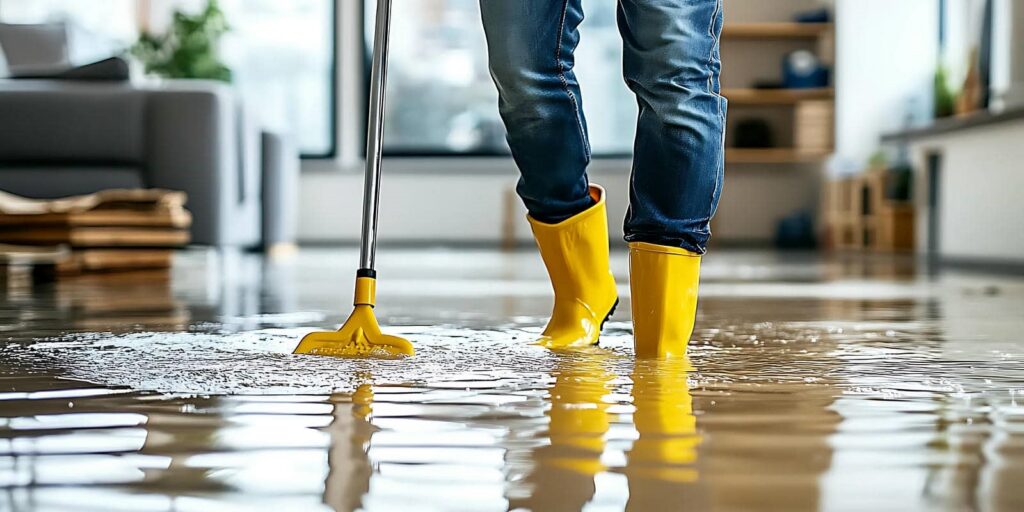
Did you know that nearly 14 million homes in the U.S. are at risk of flooding? After heavy rainstorms, addressing flood damage quickly is crucial. You might feel overwhelmed, but taking immediate action can greatly reduce further harm to your property. Knowing the right steps to follow guarantees safety and minimizes stress. Let’s explore what you should do first to protect your home and belongings effectively.
Key Takeaways
- Turn off electricity and gas immediately to prevent hazards during cleanup after flood damage.
- Document all damage with photos for insurance claims before starting the cleanup process.
- Use a wet/dry vacuum and pumps to remove standing water efficiently from your home.
- Clean and sanitize affected areas with bleach-water solutions to prevent mold growth.
- Implement preventive measures like proper drainage and waterproof sealants to reduce future flood risks.
Immediate Steps for Flood Damage Cleanup
When flooding occurs, taking immediate action is crucial to minimize damage and guarantee safety. Start by turning off electricity and gas to prevent hazards.
Wear protective gear, like boots and gloves, to shield yourself from contaminants. Document the damage with photos for insurance claims, as this can help you feel more secure in the process.
Next, begin removing standing water using pumps or buckets, if safe to do so. Dry out your home by opening windows and using fans, which can help prevent mold growth.
Finally, sort through your belongings; discard anything that’s beyond saving. These steps are essential for effective flood damage cleanup after heavy rain, helping you reclaim your space and restore a sense of normalcy.
Safety Precautions Before Cleanup
Before diving into cleanup efforts, it’s essential to guarantee your safety and that of your loved ones. Start by checking for hazards like downed power lines and unstable structures.
Wear protective gear, including gloves and boots, to shield yourself from contaminants. Confirm that your drinking water is safe, as flooding can compromise local supplies. It’s wise to have a first aid kit on hand, just in case.
If you’re using any electrical equipment, make sure it’s dry and safe to use. Keep children and pets away from affected areas to prevent accidents.
Essential Tools for Flood Damage Cleanup
Cleaning up after a flood can feel overwhelming, but having the right tools makes the process more manageable. Equip yourself with essential items that can help you tackle the damage efficiently and safely.
Wet/Dry Vacuum: This is vital for removing standing water quickly, minimizing further damage.
Mops and Buckets: Use these for final cleaning and to soak up any remaining moisture in your space.
Protective Gear: Don’t forget gloves, masks, and boots to keep yourself safe from contaminants and debris.
With these tools at your side, you’ll feel more empowered to take on the cleanup and restore your home.
How to Remove Water From Your Home
When you’re faced with water damage, the first step is to carefully assess the affected areas.
Identifying the extent of the water and any potential hazards will guide your next actions.
Once you’ve done that, it’s essential to use effective extraction tools to remove the water quickly and minimize further damage.
Assess Water Damage Area
Evaluating the water damage in your home is essential to effective cleanup and restoration. Start by identifying the most affected areas. This process not only helps you understand the extent of the damage but also prepares you for the next steps.
Here’s what you should focus on:
Check for standing water: Look in basements, crawl spaces, and low-lying areas.
Inspect walls and floors: Look for warping, discoloration, or mold growth, which can indicate hidden damage.
Assess belongings: Determine which items are salvageable and which need to be discarded.
Utilize Effective Extraction Tools
As soon as you’ve assessed the water damage, it’s crucial to begin using effective extraction tools to minimize further issues.
Start with a wet/dry vacuum; it’s excellent for removing standing water from floors and carpets. If you have access to a submersible pump, use it for deeper areas, as it can quickly clear large volumes of water.
Don’t forget to wear protective gear, like gloves and boots, to keep yourself safe. For smaller spaces, absorbent towels can help with residual moisture.
After extraction, make sure you dry the area thoroughly to prevent mold growth. Investing time in these tools now can save you stress later, helping you restore your home to its welcoming state.
Drying and Dehumidifying Flooded Areas
After a flood, drying and dehumidifying the affected areas is essential to prevent mold growth and structural damage. You’ll want to act quickly to guarantee your space returns to a safe and comfortable environment.
Here are some steps you can take:
Use fans and dehumidifiers: These tools help circulate air and remove moisture effectively.
Open windows and doors: Allowing fresh air in can greatly speed up the drying process.
Check hidden areas: Don’t forget to inspect behind walls and under floors, as moisture can linger there.
Taking these steps not only protects your home but also fosters a sense of belonging and safety for you and your loved ones as you recover from the damage.
Cleaning and Sanitizing Flooded Items
When you’re faced with flooded items, your first step is to assess what can be salvaged and what’s too contaminated.
Effective cleaning techniques can make a significant difference in restoring your belongings, so it’s vital to act quickly and carefully.
Let’s explore how to guarantee everything is cleaned and sanitized properly to protect your health and restore your space.
Assessing Contaminated Items
Floodwaters often bring more than just inconvenience; they can introduce harmful contaminants into your home. It’s crucial to assess the items affected by flooding to guarantee your safety.
Start by identifying which items can be salvaged and which need to be discarded.
Consider the following:
Porous materials: Upholstery, carpets, and mattresses often absorb contaminants and are hard to clean thoroughly.
Non-porous items: Metal, glass, and plastic can often be cleaned and sanitized effectively.
Sentimental items: Family photos and important documents may require special care to restore.
Effective Cleaning Techniques
Once you’ve assessed the contaminated items in your home, it’s time to focus on effective cleaning techniques for those that can be salvaged.
Start by removing any mud or debris with a stiff brush or cloth. For washable fabrics, use hot water and a strong detergent; adding a cup of vinegar can help eliminate odors.
Hard surfaces, like wood or metal, should be scrubbed with a mixture of bleach and water—one cup of bleach to five gallons of water. Rinse thoroughly and dry completely to prevent mold.
For electronics, consult a professional to avoid further damage.
After cleaning, make sure items are stored in a dry area. This careful approach can help restore your cherished belongings and give you peace of mind.
How to Spot and Fix Structural Issues After a Flood?
Even after the waters recede, hidden structural issues can linger in your home, making it essential to assess the damage thoroughly.
Start by checking for cracks in walls and ceilings, which could indicate shifting foundations. Look out for warped floors that might suggest water damage beneath.
Here are some signs to watch for:
- Uneven surfaces: If floors or walls feel unsteady, it could mean structural instability.
- Doors and windows sticking: This may signal that the framing has shifted.
- Mold or mildew growth: Persistent dampness can weaken structural integrity.
Addressing these issues promptly helps guarantee your home remains safe and supportive, allowing you to rebuild your space with confidence and care.
When to Call Professional Flood Restoration Services?
If you find yourself overwhelmed by the aftermath of a flood, it’s essential to recognize when it’s time to call in professional flood restoration services.
If water damage is extensive, like deep flooding or saturated walls, don’t hesitate. Mold can develop quickly, so if you notice a musty smell or discoloration, it’s critical to reach out for help.
You should also consider professionals if you’re unsure about the safety of your electrical systems or structural integrity.
Even if the damage seems manageable, professionals have the expertise and equipment to guarantee thorough cleanup and restoration, giving you peace of mind.
Tips for Preventing Future Flood Damage in Your Home
While it might feel like flood damage is inevitable, there are proactive steps you can take to protect your home.
By implementing some preventive measures, you can greatly reduce the risk of flooding in the future.
Inspect and maintain your gutters: Regularly clean and repair gutters to guarantee proper drainage.
Landscape strategically: Grade your yard away from the foundation to direct water flow away from your home.
Seal cracks and openings: Use waterproof sealants on basements and foundation cracks to keep water out.
Frequently Asked Questions
How Can I Identify Hidden Water Damage in My Home?
To identify hidden water damage in your home, start by checking for discoloration on walls and ceilings.
Look for peeling paint or wallpaper, which can signal moisture beneath.
Don’t forget to inspect floors for warping or soft spots.
Use a moisture meter if you have one, and pay attention to musty odors, indicating mold.
If you suspect damage, act quickly to prevent further issues; you’ve got a community ready to support you!
What Insurance Coverage Applies to Flood Damage Cleanup?
“An ounce of prevention is worth a pound of cure.”
When it comes to flood damage cleanup, your homeowners insurance might cover some costs, but it often excludes flood damage.
You’ll want to check if you have a separate flood insurance policy through FEMA or the National Flood Insurance Program.
Review your coverage details carefully, and don’t hesitate to reach out to your insurance agent for clarity.
It’s important to know your options.
Can Mold Develop Even After Cleanup Efforts?
Yes, mold can develop even after cleanup efforts. If moisture remains, mold spores can thrive, often within 24 to 48 hours.
It’s essential to thoroughly dry all affected areas and materials. You should also consider using dehumidifiers and fans to prevent moisture buildup.
Regularly check for signs of mold, and don’t hesitate to seek professional help if you notice any. Staying proactive helps protect your home and keeps your environment healthy.
How Long Does It Take to Fully Dry a Flooded Area?
It can feel like waiting for a glacier to melt, but drying a flooded area usually takes 3 to 5 days, depending on the extent of the water damage and humidity levels.
You’ll want to use fans, dehumidifiers, and open windows to speed things up.
Remember, the sooner you act, the better your chances are of preventing mold and further issues.
You’re not alone in this; many have faced similar challenges and come out stronger!
Are There Any Government Assistance Programs for Flood Recovery?
Yes, there are several government assistance programs available for flood recovery.
You can look into FEMA’s Individual Assistance program, which helps with temporary housing and home repairs.
Your local or state government may also offer grants and loans specifically for flood victims.
It’s important to stay connected with community resources; they can guide you through the application process and guarantee you get the support you need during this challenging time.
Wrap-Up
As you navigate the aftermath of flood damage, think of your home as a ship weathering a storm. With each step you take removing water, drying out spaces, and sanitizing belongings you’re not just repairing; you’re fortifying your vessel against future tempests. Remember, it’s okay to seek help when the waves feel overwhelming. By taking proactive measures now, you can steer your home toward safety and security, ensuring it remains a safe harbor for you and your loved ones.