
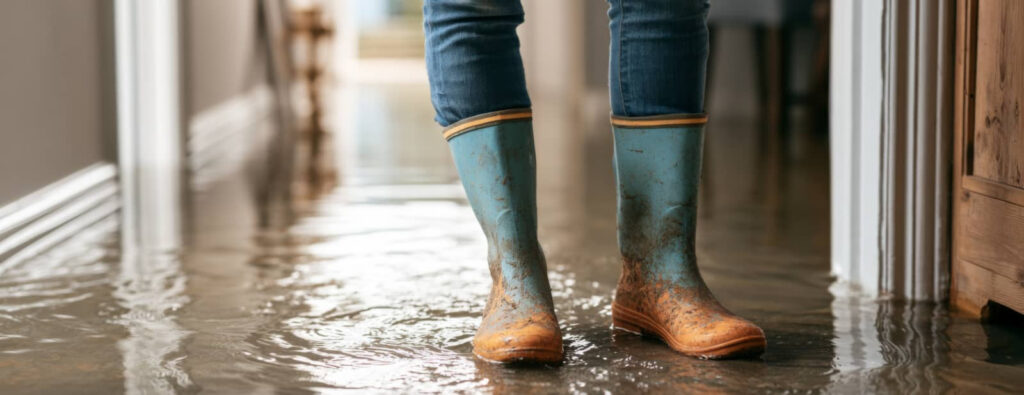
After heavy rain, flood damage can feel like a full-scale emergency in your home. You need to act fast: shut off power if it’s safe, document the damage, and stop more water from entering. Then you can dry the space, remove ruined materials, and clean contaminated surfaces before mold takes hold. Each step affects the next, and what you do in the first few hours can change everything.
Key Takeaways
- Turn off electricity if safe, avoid contaminated areas, and document damage with photos for insurance.
- Remove wet items quickly, bag porous debris, and clean hard surfaces with approved antimicrobial products.
- Use dehumidifiers, air movers, and ventilation to dry spaces fast and prevent mold growth.
- Cut out soaked drywall, insulation, carpet padding, and inspect structural integrity before repairs.
- Seal foundation cracks, improve drainage, and install sump pumps to reduce future flood damage.
What to Do First After Flood Damage
After flood damage, your first priority is safety: turn off electricity if you can do so without entering standing water, avoid contaminated areas, and wait for professionals if the structure may be unstable.
Next, document visible damage with photos from dry, stable locations, then contact your insurer and a trusted flood damage restoration after heavy rain team.
You don’t need to handle everything alone; your crew will help you secure the property, assess moisture, and explain the plan.
Remove only lightweight, nonporous items if it’s safe, and discard food, medicine, and soaked materials that can’t be sanitized.
Open windows only if outdoor conditions are dry and secure.
Acting quickly lowers secondary damage and gets your home moving toward recovery with people who know what you’re facing.
Keep More Water Out
You can reduce repeat flooding by sealing foundation cracks with hydraulic cement or epoxy and checking for other entry points around the slab and walls.
You’ll also want to improve drainage paths by clearing gutters, extending downspouts, and grading soil away from the structure so water moves offsite.
If your basement uses a sump pump, add backup power and a properly fitted cover to keep the system ready when stormwater rises.
Seal Foundation Cracks
Sealing foundation cracks helps stop floodwater from finding new entry points and reduces ongoing moisture intrusion.
You should inspect visible cracks in concrete walls, joints, and floor slabs for widening, staining, or damp edges. Clean each area thoroughly so repair materials bond well, then apply an appropriate hydraulic cement or epoxy system based on crack size and movement.
You’ll want a continuous, tight seal that resists pressure and limits seepage after storms. If you join a team of homeowners taking recovery seriously, you’re already ahead by addressing the structure, not just the symptoms.
After sealing, monitor repaired areas during rain for any new dampness. Prompt attention to small openings can protect your interior, support healthier air, and help your home feel secure again.
Improve Drainage Paths
Clear drainage paths so stormwater moves away from your home instead of pooling against it. You can regrade low spots, extend downspouts, and keep gutters free of leaves so runoff follows a controlled route.
Check that swales, yard drains, and driveway edges slope away from the foundation and toward safe discharge points. If soil settles after heavy rain, add topsoil and compact it to restore the grade.
Trim plants that block flow, and remove debris from culverts or grates before the next storm. When water has a clear path, you reduce hydrostatic pressure and limit moisture intrusion.
These upgrades also help your whole property recover faster, so you and your neighbors stay better protected together.
Install Sump Protection
Once drainage paths send runoff away from the foundation, the next line of defense is sump protection that keeps groundwater from getting inside.
You can strengthen your home with a properly sized sump pump, a tight lid, and a sealed basin that limits vapor and debris.
Install a battery backup so your system keeps working during outages, when storms hit hardest.
Inspect the check valve and discharge line so water leaves quickly and doesn’t cycle back. Regular testing helps you spot trouble before it spreads.
- Choose a pump matched to your basin depth
- Seal openings to reduce seepage and odors
- Test backup power before every rainy season
With these steps, you’re building a safer, more resilient home and joining the group of owners who stay ahead of flood damage.
Dry Out the Home Fast
Swift drying is critical after flood damage because standing moisture can quickly lead to mold, structural deterioration, and lingering odors.
You should open windows when weather allows, run high-capacity dehumidifiers, and place air movers to create crossflow through wet rooms.
Keep HVAC fans on if a pro confirms the system’s safe, and use moisture meters to track progress in walls, floors, and trim.
Focus on lowering indoor humidity below 60% as fast as you can.
Remove surface water with wet vacuums, then dry hidden pockets behind baseboards and under cabinets.
You’re not doing this alone; a coordinated drying plan helps your home recover faster and gives your household a cleaner, healthier place to return to.
Remove Damaged Materials Safely
After the home has dried as much as possible, you need to remove materials that can’t be safely cleaned or restored. Wear gloves, boots, and a respirator if dust or debris is present.
Work from the top down, and keep structural members intact while you separate ruined items from salvageable ones. You’re not alone in this step; a careful, methodical approach helps your home recover faster.
Cut out soaked drywall, insulation, and carpet padding.
Bag and seal porous debris for prompt disposal.
Label removed sections so repairs stay organized.
Use controlled cuts to avoid damaging framing, wiring, or plumbing. Stack waste away from living areas, and keep pathways clear for later repairs.
When you remove materials safely, you protect the structure and make the next restoration stages smoother for everyone involved.
Clean Up and Disinfect Floodwater
You’ll need to remove floodwater quickly using safe pumping or extraction methods to reduce further damage and contamination.
After the standing water is gone, you should clean all affected surfaces with approved detergents and then disinfect them to kill bacteria, mold spores, and other hazards.
This process helps restore a safer indoor environment and prepares the space for drying and repairs.
Safe Water Removal
Removing floodwater safely starts with a careful assessment of the contamination level, because floodwater often carries sewage, chemicals, and debris that require professional cleanup methods.
You should wear protective gear, shut off power if it’s safe, and use pumps or wet vacuums to lower the water level quickly. Work in stages so you can control flow, prevent spreading, and protect structural materials.
- Mark unstable areas before you enter.
- Remove standing water from the highest-risk rooms first.
- Monitor moisture levels as you drain.
You’re not handling this alone; a trained restoration team can help you stay organized and confident.
After bulk water is gone, you can move into drying and cleanup with a clearer, safer workspace.
Disinfection And Sanitizing
Once the standing water is out, professionals move in to disinfect and sanitize every affected surface to reduce health risks and stop contamination from spreading.
You’ll see them clean walls, floors, trim, and fixtures with EPA-approved antimicrobial products matched to the flood source. They don’t just wipe visible residue; they scrub porous debris, treat hidden seams, and target high-touch areas that can harbor bacteria and mold.
You stay safer when technicians wear proper PPE, control cross-contamination, and use fresh tools for each zone.
After treatment, they rinse when required, dry surfaces fully, and confirm no odor or residue remains.
This careful process helps your space feel clean again, so you can rejoin your home with confidence, knowing your recovery team has protected it well.
Repair Structural Flood Damage
After floodwater recedes, professionals inspect the structure for hidden damage to the foundation, framing, subflooring, and load-bearing walls before making any repairs.
You’re not alone in this step; we stabilize your home, document the findings, and map out needed structural repairs.
Using moisture readings, level checks, and visual assessment, we identify weakened members, rot, shifting, and compromised connections.
Then we reinforce or replace damaged components to restore strength and safety.
- Assess structural integrity first
- Repair or replace compromised framing
- Verify alignment, support, and load paths
Throughout the process, you get clear updates and practical guidance, so you can feel confident your home’s structure is being restored correctly.
Our goal is to bring your space back to a secure, dependable condition with precision and care.
Restore Flooring, Walls, and Fixtures
With the structure stabilized, we remove damaged flooring, drywall, trim, and fixtures so we can rebuild the interior properly.
You’ll see our team cut out warped materials, detach baseboards, and disconnect compromised electrical or plumbing fixtures with care.
We then assess subfloors, framing, and backing surfaces for hidden weakening, replacing anything that won’t support a durable finish.
You stay informed at each step, so you know what’s being salvaged and what’s being renewed.
After that, we install approved underlayment, drywall, insulation, flooring, and trim to restore fit, function, and appearance.
Finally, we reinstall fixtures and verify alignment, fastening, and operation.
This process helps your home feel whole again, and it gives you a solid interior ready for the next stage.
Prevent Mold After Flooding
Even as damaged materials are removed and rebuilt, mold control has to start immediately because moisture can linger in hidden cavities and create new problems.
You’ll protect your home by drying every surface fast, using dehumidifiers, and opening airflow paths. Keep indoor humidity below 60%, and inspect wall voids, subfloors, and insulation for trapped water.
If you smell mustiness, test and treat the area before rebuilding. You’re not handling this alone; a restoration team can help you measure moisture and verify safe drying.
- Remove wet items within 24-48 hours.
- Clean hard surfaces with approved antimicrobial products.
- Replace porous materials that stayed soaked.
With the right response, you can stop mold early and keep your space healthy, stable, and ready for recovery.
Frequently Asked Questions
What Should I Ask My Insurance Company After Flood Damage?
Ask if your policy covers floodwater, temporary housing, document deadlines, deductibles, repair approvals, and preferred contractors. You’ll feel more confident when you confirm claim steps, coverage limits, and any required photos or receipts.
How Long Does Flood Restoration Usually Take?
Usually, you’ll wait days to weeks; small jobs often finish in 3–7 days, while severe losses can take a month or more. You’re not alone—most basements face moisture risks after flooding.
Can I Stay in My Home During Restoration?
You can sometimes stay, if repairs stay limited and your home’s air, power, and structure remain safe. If crews isolate work zones and control moisture, you’ll often keep living there with minimal disruption.
What Documents Should I Save for a Flood Insurance Claim?
Save receipts, photos, videos, repair estimates, inventory lists, insurance correspondence, and cleanup logs. You’ll strengthen your claim by organizing dates, item values, and damage details, so you can feel confident throughout the process.
How Do Professionals Estimate Flood Damage Repair Costs?
You’ll get a precise price estimate by inspecting damage, measuring moisture, checking materials, and tallying labor, equipment, and replacements. Professionals document everything, compare code requirements, and explain costs clearly so you’ll feel confident and included.
Review
When flood damage hits after heavy rainstorms, you’ve got to act like a steady hand in a storm. Shut off hazards, stop more water, and dry the home quickly to keep mold from taking root. Remove damaged materials safely, clean and disinfect, then repair structural issues with care. Restore floors, walls, and fixtures step by step. With a clear plan and prompt action, you’ll turn a soaked space back into a safe, sound home.