
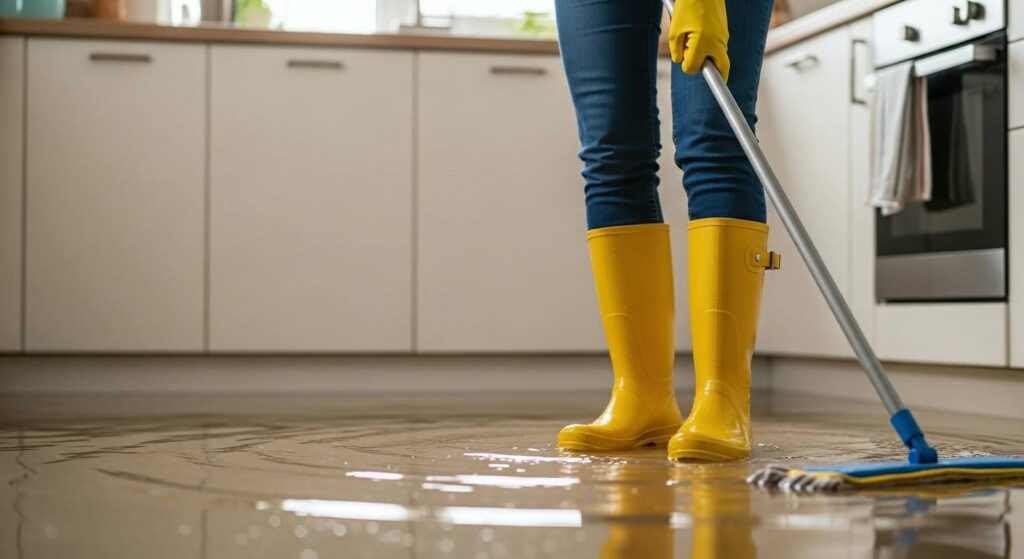
When life throws a curveball like flood water into your home, it’s essential to handle the situation with care. You’ll want to prioritize your safety while effectively addressing the mess. Start by ensuring your environment is safe and gather the right tools for the job. Understanding the proper steps can make all the difference in a stressful time, so let’s explore how to navigate this cleanup process efficiently.
Key Takeaways
- Wear protective gear, including gloves and boots, to shield against contaminants during cleanup.
- Turn off electricity to prevent shocks before starting the water removal process.
- Use a wet/dry vacuum or sump pump to efficiently remove standing water.
- Ventilate the area by opening windows and using fans to facilitate drying.
- Inspect for structural damage and monitor local advisories for safety updates.
Stay Safe: Precautions Before Flood Cleanup
Before you plunge into flood cleanup, it’s vital to prioritize your safety. Start by wearing protective gear like gloves and boots to shield yourself from contaminants.
Confirm your home’s electricity is turned off to prevent shocks. If the floodwaters are deep, consider waiting for professionals—it’s important to know how to remove flood water safely.
Keep an eye out for structural damage; if you notice instability, don’t enter. Always check local advisories for updates on water quality and potential hazards.
Key Indicators of Flood Damage to Check
As you assess your home after a flood, look for key indicators of damage that could affect your safety and recovery.
Start by checking for water stains on walls and ceilings, which reveal how high the water reached. Notice any warped or buckled floors; this can indicate structural issues.
Pay attention to musty odors, a sign of mold growth, which can pose health risks. Inspect electrical systems and appliances for water exposure—turn off power if necessary.
Finally, examine your belongings; items that absorbed water may need to be discarded.
By identifying these signs early, you can take steps to protect your home and family, ensuring a smoother recovery process.
You’re not alone in this; support is available.
Essential Tools for Flood Water Removal
When you’re faced with the challenging task of removing flood water, having the right tools can make all the difference.
First, grab a robust wet/dry vacuum; it’s essential for sucking up standing water quickly. You’ll also need heavy-duty mops and buckets for smaller areas. A sump pump is crucial for draining larger spaces efficiently.
Don’t forget to have a good pair of rubber gloves and boots to protect yourself while working. A sturdy flashlight will help you navigate dark spaces safely.
If you have any damaged drywall or flooring, a utility knife and pry bar will be handy.
Your Step-by-Step Flood Water Removal Process
With the right tools gathered, you’re ready to tackle the flood water removal process.
Start by evaluating the area check for any hazards like electrical issues. Once it’s safe, begin by using a wet/dry vacuum to remove standing water. If the water level is high, consider using a submersible pump for quicker removal.
After draining, use mops and towels to soak up residual moisture.
Don’t forget to ventilate the space; open windows and use fans to speed up drying. As you work, keep an eye out for mold growth and take immediate action if you spot any.
Finally, clean and disinfect all surfaces to prevent future issues.
You’re not alone in this; many have faced similar challenges and come out stronger.
Tips for Preventing Future Flood Damage
To prevent future flood damage, you should start by evaluating your property’s drainage system. Make sure gutters and downspouts are clear and direct water away from your foundation.
Consider installing a sump pump in your basement to manage excess water. Additionally, landscaping plays a big role grade your yard so water flows away from your home.
Check for cracks in your foundation and seal them promptly. If you live in a flood-prone area, think about flood barriers or levees.
Finally, stay informed about local weather patterns and flood alerts. By taking these proactive steps, you’ll not only protect your home but also create a safer environment for your loved ones.
You deserve peace of mind!
Frequently Asked Questions
How Can I Tell if My Home Is Structurally Safe After Flooding?
To determine if your home’s structurally safe after flooding, start by checking for visible damage like cracks in walls or ceilings.
Inspect the foundation and look for any sagging floors. If you notice any unusual smells or mold, that’s a red flag.
It’s wise to consult a professional for a thorough evaluation, as they’ll spot issues you might miss.
Your safety matters, so don’t hesitate to seek help if you’re unsure.
What Should I Do With Contaminated Items After a Flood?
When dealing with items that’ve seen better days post-flood, it’s best to give them a graceful farewell.
Start by sorting through your belongings; anything that’s soaked or contaminated should be discarded.
For items you think might be salvageable, clean them thoroughly and dry them out.
Don’t hesitate to lean on your community for support—sharing this burden can lighten the load.
Are There Any Specific Health Risks Associated With Flood Water?
Yes, flood water poses several health risks. It can contain harmful bacteria, viruses, and chemicals that may lead to infections or illness.
You might also face risks from contaminated food or water sources. Additionally, standing water can attract mosquitoes, increasing the chance of diseases.
It’s essential to protect yourself by wearing gloves and boots when handling contaminated items, and consider consulting a healthcare professional if you experience any unusual symptoms afterward.
Stay safe!
How Long Does It Take for Flood-Damaged Materials to Dry?
Flood-damaged materials can take anywhere from a few days to several weeks to dry, depending on factors like humidity, airflow, and the type of material.
You’ll want to start drying things out as soon as possible to prevent mold growth. Using fans and dehumidifiers can speed up the process.
When Should I Contact Professionals for Flood Damage Restoration?
Think of your home as a delicate flower; when it’s submerged, it needs expert care to bloom again.
Contact professionals as soon as you notice significant water damage or if the water level exceeds a few inches. They can assess the situation, prevent mold growth, and restore your space effectively.
Trusting experts guarantees your home gets the attention it deserves, helping you feel safe and supported during this challenging time.
To Sum up
As you tackle flood cleanup, remember that even the mightiest rivers can be tamed with patience and care. By following these steps, you not only restore your home but also safeguard your peace of mind. Just like the phoenix rising from the ashes, you have the power to rebuild and fortify against future storms. Stay vigilant, maintain your defenses, and turn this challenge into a chance for renewal. Your home will emerge stronger, reflecting your resilience.