
Like a seasoned captain steering through stormy seas, professionals approach flood damage cleanup with precision and care. They assess the situation, ensuring safety while employing advanced tools to tackle the aftermath. With a methodical plan in place, they prioritize not just cleaning, but also preventing long-term issues like mold. Understanding the complexities involved is vital, so let’s explore how these experts turn chaos into order, ensuring your space is safe and sound.
Key Takeaways
- Professionals assess damage and prioritize cleanup while ensuring safety from electrical hazards and structural stability.
- They utilize advanced tools like wet/dry vacuums, fans, and dehumidifiers for efficient water removal and drying.
- Cleanup teams document damage with photos for accurate insurance claims and thorough reporting.
- They implement sanitization measures to prevent mold growth and address health risks from contaminated water.
- Licensed and insured services ensure reliability, using experienced technicians available 24/7 for prompt response.
How to Navigate the Flood Damage Cleanup Process
When you find yourself facing the aftermath of a flood, it’s essential to approach the cleanup process methodically to minimize damage and guarantee safety.
Start by evaluating the situation identify which areas are most affected and prioritize them. Professionals often begin with safety checks, ensuring there’s no risk of electrical hazards or structural instability.
Next, they carefully remove water and debris, using pumps and vacuums. They understand the importance of documenting damage for insurance claims, so take photos as you go.
Once water removal is complete, they focus on drying and sanitizing to prevent mold growth.
Key Tools for Flood Damage Cleanup
As you tackle flood damage cleanup, having the right tools on hand can make all the difference in restoring your space efficiently and safely.
Start with a sturdy wet/dry vacuum to remove standing water quickly. You’ll also need heavy-duty fans and dehumidifiers to help dry out the affected areas and prevent mold growth.
Personal protective equipment, like gloves and masks, is essential to keep you safe from contaminants. A moisture meter can help you identify hidden damp spots, ensuring nothing is overlooked.
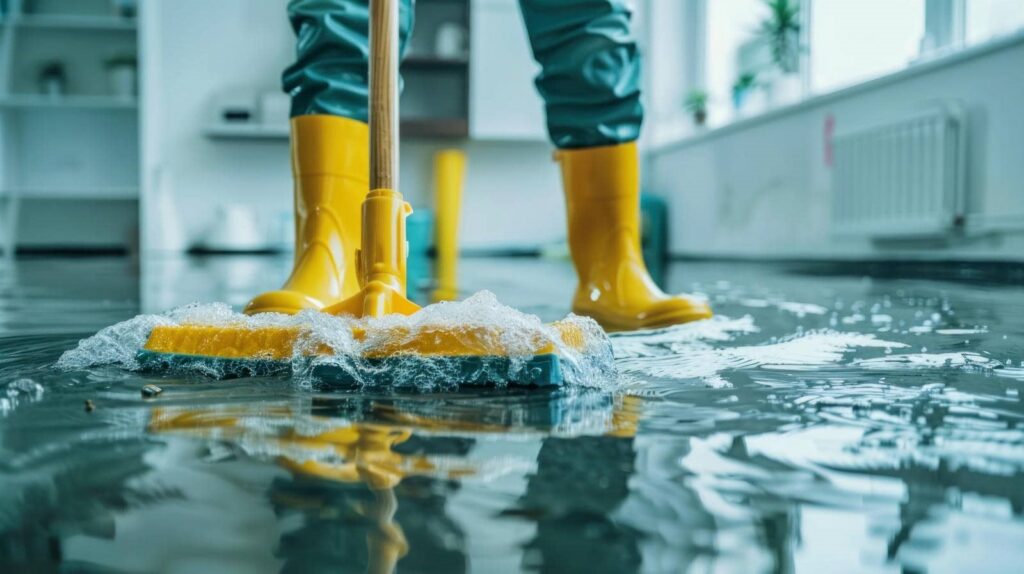
Additionally, using a squeegee and mop can assist in removing residual water.
Having these tools at your disposal not only streamlines the process but also gives you peace of mind that you’re taking effective steps toward recovery.
Identifying and Mitigating Health Risks in Flood Damage Cleanup
Flood damage cleanup can expose you to various health risks, making it essential to identify and mitigate them promptly. Here are four key risks to be aware of:
Mold Growth: Wet environments promote mold, which can lead to respiratory issues and allergies.
Contaminated Water: Floodwater often contains harmful bacteria and chemicals that can cause serious illnesses.
Structural Hazards: Weak or damaged structures can pose physical dangers, leading to injuries during cleanup.
Chemical Exposure: Cleaning products and materials may release toxic fumes, requiring proper ventilation and protective gear.
Being proactive about these risks can greatly reduce health threats.
Always prioritize your safety and well-being, and don’t hesitate to seek professional help when necessary. You’re not alone in this!
What to Look for in Flood Damage Cleanup Services?
How can you guarantee you’re choosing the right flood damage cleanup service? Start by looking for licensed and insured professionals; this protects you from liability.
Check their reputation through reviews and testimonials—trustworthy services often have positive feedback from past clients.
Make certain they use advanced equipment and techniques, as effective water extraction and drying are essential.
Inquire about their response time; a reliable service should be available 24/7 to address emergencies promptly.
Don’t forget to ask about their experience with similar situations; seasoned professionals can navigate challenges more effectively.
Finally, a compassionate approach matters—choose a team that understands your emotional stress and communicates openly, making you feel supported throughout the cleanup process.
Best Practices for Preventing Future Flood Damage
Choosing the right flood damage cleanup service is just the first step; preventing future flooding is equally important. You can take proactive measures to protect your home and community.
Here are four best practices to reflect upon:
Elevate critical utilities: Verify your electrical systems, HVAC, and water heaters are above potential flood levels to minimize damage.
Install sump pumps: These can help keep your basement dry during heavy rains, acting as your first line of defense.
Landscape strategically: Use grading and drainage systems to direct water away from your home, reducing flood risk.
Maintain gutters and downspouts: Regular cleaning helps prevent clogs, verifying proper water flow away from your property.
Frequently Asked Questions
How Long Does Flood Damage Cleanup Typically Take?
Flood damage cleanup typically takes anywhere from a few days to several weeks, depending on the extent of the damage.
You’ll find factors like the size of the affected area, water type, and necessary repairs play significant roles.
It’s tough to navigate this process, but with patience and the right help, you can restore your space.
Stay connected with professionals who understand your needs, and they’ll guide you through every step.
What Are the Costs Involved in Flood Damage Cleanup?
When floodwaters recede, the hidden costs emerge like shadows at dusk.
You’re looking at expenses ranging from $1,000 to $5,000 for initial cleanup, depending on the severity. This includes water extraction, drying, and mold prevention.
Repairs and replacements add to the bill, often climbing higher.
It’s essential to remember that investing in thorough cleanup can safeguard your home and peace of mind, helping you rebuild your sanctuary after the storm.
Will My Insurance Cover Flood Damage Cleanup Expenses?
Yes, your insurance might cover flood damage cleanup expenses, but it depends on your policy.
Many standard homeowners’ policies don’t include flood coverage, so you may need separate flood insurance.
It’s essential to review your policy details and contact your insurer to clarify what’s covered.
If you’re unsure, reaching out to a professional can help you navigate this process, ensuring you get the support you need during this challenging time.
How Can I Protect My Belongings During a Flood?
To protect your belongings during a flood, elevate items by placing them on shelves or tables.
Use waterproof containers for important documents and valuables.
Consider using sandbags around entry points to minimize water intrusion.
If you have time, move furniture and electronics to higher ground.
Finally, document everything with photos for insurance purposes.
Taking these steps can give you peace of mind, knowing you’ve done what you can to safeguard your cherished items.
What Should I Do Immediately After a Flood Occurs?
After a flood, you might think it’s time for a swim, but hold on! First, check for hazards like downed power lines and unsafe structures.
Once that’s clear, document the damage with photos—your future self will thank you.
Next, start removing wet items to prevent mold; remember, soggy boxes don’t make good friends.
Finally, contact your insurance—don’t let those claims float away!
Stay safe, and take it step by step.
Recap
In the wake of water woes, you’ve got the power to pursue professional help for flood damage cleanup. By choosing skilled specialists, you safeguard your sanctuary from the silent spread of mold and mildew. With their advanced arsenal of tools and techniques, they’ll transform the tumultuous turmoil into a tidy, tranquil space. Remember, proactive precautions pave the path to prevention, ensuring your home remains a haven, safe from future floods and their aftermath.